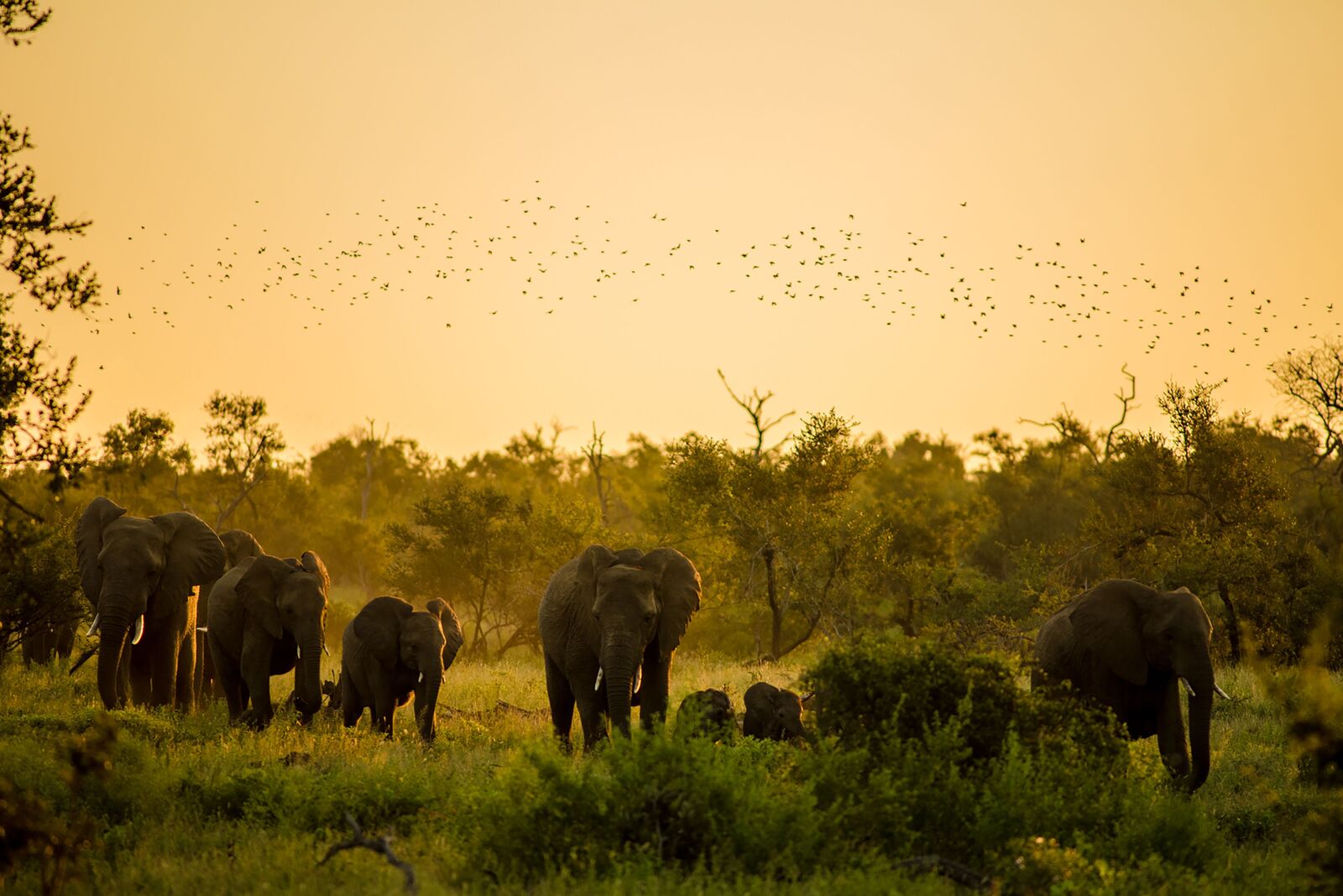
Sabi Sand Game Reserve covers 65,000 hectares, around 650 square kilometres, of Lowveld bushveld in Mpumalanga, South Africa, sharing a 50 kilometre unfenced border with Kruger National Park. First established by a group of neighbouring landowners in 1948, it is widely regarded as the most prestigious private reserve in the country, holding the highest recorded leopard density of any protected area in South Africa alongside dependable Big Five viewing all year round.
Unlike a public park, Sabi Sand is private land divided into more than twenty individual concessions, each operated by a single lodge or a small family of lodges, several still owned by the founding families. This guide sets out when to go, what wildlife to expect, how long to stay, entry requirements for South Africa, current lodge and conservation fees, accommodation across every tier, what to pack and how to get there.
Best time to visit
Sabi Sand is a year round destination; with no migratory herds passing through, its resident wildlife is present whatever the season. Timing here is mostly a question of weather, malaria risk and the kind of landscape preferred rather than animal movement.
The dry winter season, from May to September, is generally considered the best time for game viewing. Vegetation thins out, rivers and waterholes shrink, and animals concentrate around the remaining water, making sightings easier and more frequent. Days are mild and sunny; mornings, particularly in June, July and August, can drop close to freezing before warming up quickly. Malaria risk is at its lowest during these months. September and October, the tail end of winter, are often singled out as the very best weeks, since dwindling water sources push predator and prey together at predictable spots.
The wet summer season, from November to April, brings lush green scenery, newborn animals, notably impala lambs from around October, and an influx of colourful migratory birds. Days are hot and humid, regularly above 30°C and occasionally exceeding 40°C, with afternoon thunderstorms that usually clear before the evening game drive. Malaria risk is at its highest in these wetter months, and vegetation is thicker, which can make game viewing slightly harder, though sightings remain frequent thanks to the skill of Sabi Sand's trackers.
What wildlife to expect
Sabi Sand's defining feature is its leopard population. A camera trap survey by Panthera and Singita recorded 12.2 leopards per 100 square kilometres in the reserve, the highest density of any protected area surveyed in South Africa. Decades of daily tracking have left many of Sabi Sand's leopards well habituated to vehicles, allowing close, unhurried sightings that are genuinely rare elsewhere on the continent.
Lion are equally well represented, with several territorial prides and male coalitions tracked daily by guides, their movements and rivalries followed closely enough that some have become locally famous over the years. Elephant and buffalo move through the reserve in large herds, hippo are resident in the Sabie and Sand Rivers, and both white and black rhino are present, though black rhino sightings are less frequent and treated with discretion given ongoing poaching pressure.
Cheetah are present but seen less often than leopard, since Sabi Sand's denser bush suits leopard hunting style better than the open ground cheetah prefer. African wild dog, once largely absent from the reserve, have been successfully reintroduced and sightings have become increasingly common in recent years. Beyond the headline species, giraffe, kudu, waterbuck, impala, warthog and several hyena clans round out a mammal list of around 148 species, while the reserve's two rivers and varied habitat support more than 500 recorded bird species.
How long to stay
Most lodges recommend three to four nights, which gives six to eight game drives, generally enough time for strong Big Five sightings and at least a few leopard encounters. Because drives run at dawn and again in the late afternoon into the night, even a three night stay covers a meaningful amount of ground. Five nights or more suits travellers hoping to also see wild dog, black rhino or cheetah, or who want to split their stay between two lodges in different parts of the reserve.
Getting there and reserve access
Sabi Sand lies roughly 420 kilometres, a five to six hour drive, north east of Johannesburg in the Mpumalanga Lowveld. Most visitors fly: scheduled flights connect O.R. Tambo International Airport (JNB) in Johannesburg to Kruger Mpumalanga International Airport (MQP), around 50 minutes away, or to Skukuza Airport (SZK) inside Kruger itself, around an hour away, followed by a road transfer of 45 minutes to two hours depending on which of Sabi Sand's three gates, Newington, Shaw's or Gowrie, serves the lodge. Several lodges also operate their own private airstrip, reached by light charter flight direct from Johannesburg.
Travellers flying from Nairobi can connect to Johannesburg with Kenya Airways or Airlink in around four hours, with onward connections to Mpumalanga often possible the same day.
Entry requirements and visa
Most major source markets, including the United States, the United Kingdom, the European Union, Canada, Australia and Kenya, can enter South Africa visa free for tourism stays of up to 90 days. From late 2025, South Africa introduced an Electronic Travel Authorisation for a smaller list of nationalities, including mainland China, India, Indonesia and Mexico, who previously needed a full visa; travellers from these countries should apply online before departure. South Africa does not offer visa on arrival for most other nationalities, so anyone not covered by a visa free or ETA arrangement needs to apply for a visa in advance through a South African embassy, consulate or VFS Global centre.
Travellers arriving from Kenya, or who have transited through a yellow fever risk country for more than 12 hours, must carry a valid yellow fever vaccination certificate, administered at least ten days before arrival; failure to produce one can lead to quarantine or refused entry. Entry requirements are revised periodically, so it is worth checking the official South African e-Visa portal or the nearest embassy close to the date of travel rather than relying on older guides.
Park fees and costs
Sabi Sand's pricing works differently from a public national park, since there is no separate entry ticket; instead, a conservation charge sits alongside the lodge's nightly rate. The Sabi Sand Wildtuin levies a Guest Conservation Contribution, often called the rhino levy, on every guest, charged per person per night and tiered according to the lodge's own rack rate. For 2026, this ranges from roughly R310 to R958, about $19 to $59, including VAT, and several lodges cap it at three nights regardless of the length of stay. Guests who self-drive or arrange their own road transfer independently also pay a separate, one-off entry fee on top of the conservation levy; this is waived for guests who fly in or whose road transfer is booked directly through the lodge, and the current amount is best confirmed directly with the reserve or your lodge.
Lodge rates are fully inclusive of accommodation, all meals, two guided game drives a day and, at most properties, selected drinks. Sabi Sand sits firmly at the premium end of the safari market, and rates vary considerably by lodge, room category and season, climbing from several hundred US dollars per person per night at the more accessible properties to several thousand at the handful of ultra luxury addresses, among them Singita, MalaMala and Londolozi's flagship camps, particularly in peak season. Because rates are reviewed regularly, it's worth requesting a current quote directly from the lodge or a specialist operator rather than relying on published brackets. Several lodges offer a discounted rate or an extra free night for stays of three nights or more outside the Christmas peak.
Flights add a further cost: domestic flights between Johannesburg and Mpumalanga's airports cost roughly $50 to $250 each way depending on how far in advance they are booked, while a self-drive from Johannesburg, at around six hours, is a cheaper but considerably longer alternative.
Accommodation options
Premium
Lodges such as Savanna Private Game Reserve, Leopard Hills, Ulusaba's Rock Lodge, Djuma Vuyatela and the various Lion Sands properties sit in this band, generally smaller camps with higher guide to guest ratios and strong game viewing on well managed concession land.
Luxury
Londolozi's Tree Camp and Founders Camp, &Beyond's Kirkman's Kamp, and Sabi Sabi's Earth Lodge and Little Bush Camp sit at this level. Architecture, cuisine and service rival fine dining destinations in their own right, and many add walking safaris and night drives to the standard programme.
Ultra luxury
Singita Sabi Sand's Boulders and Ebony lodges, MalaMala Main Camp and Londolozi's Varty and Pioneer Camps represent the absolute top tier. Several sit on exclusive use concessions where no other lodge's vehicles are permitted at a sighting, the closest Sabi Sand comes to a fully private safari.
What to pack
Sabi Sand sits in the low lying, subtropical Lowveld, considerably hotter and more humid than the highland savannahs of East Africa. Winter days, from May to September, are warm and dry with mornings dropping close to freezing in mid-winter, so warm layers, gloves and a beanie are worth packing even though afternoons are mild; lodges generally supply blankets and hot drinks on early drives. Summer, from November to April, is hot and humid, often above 30°C and occasionally over 40°C, with afternoon thunderstorms, so light breathable clothing and a packable rain layer matter more than warmth. Neutral colours, khaki, olive and stone, are recommended for game drives in any season; bright colours and white stand out against the bush.
Because Sabi Sand lies within South Africa's malaria belt, insect repellent containing DEET, long sleeves and trousers for dawn and dusk drives, and a course of antimalarial medication taken on a doctor's advice are standard precautions, particularly during the wetter summer months when risk is highest. As with most safari destinations, a pair of 8x42 or 10x42 binoculars and a telephoto lens in the 100 to 400mm range will make the most of the close leopard and lion sightings the reserve is known for; a beanbag or vehicle mounted support works better than a tripod inside a safari vehicle.
Frequently asked questions
Is Sabi Sand worth visiting?
Yes. Sabi Sand holds the highest recorded leopard density of any protected area in South Africa, with reliable Big Five sightings throughout the year, well documented lion prides, and a growing population of African wild dog, all viewed from open vehicles with experienced guides and trackers.
How many days do you need in Sabi Sand?
Three to four nights is the recommended stay, giving six to eight game drives. This is usually enough time for strong Big Five sightings and several leopard encounters. Five nights or more suits travellers hoping to also see wild dog, black rhino or cheetah, or wanting to combine more than one lodge.
What is the best time to visit Sabi Sand?
The dry winter season from May to September offers the best game viewing, thinner vegetation and the lowest malaria risk, with September and October often singled out as animals concentrate around shrinking water sources. The wetter summer months from November to April are hot, humid and lush, with newborn animals and migratory birdlife, but a higher malaria risk.
Do I need a visa to visit Sabi Sand in South Africa?
Most major source markets, including the United States, the United Kingdom, the European Union, Canada, Australia and Kenya, can enter South Africa visa free for stays of up to 90 days. A small number of nationalities, including mainland China, India, Indonesia and Mexico, must apply online for an Electronic Travel Authorisation before departure. South Africa does not offer visa on arrival for most other nationalities.
How much does a Sabi Sand safari cost?
Lodge rates, fully inclusive of meals and two guided game drives a day, vary considerably by property, room category and season, climbing from several hundred US dollars per person per night at the more accessible lodges to several thousand dollars at the handful of ultra luxury addresses. A mandatory conservation levy of roughly $19 to $59 per person per night is added on top, and it's worth requesting a current quote directly from the lodge or a specialist operator.
Is Sabi Sand a malaria area, and is it safe?
Sabi Sand lies within South Africa's malaria belt, with risk highest during the wet summer months and lowest in the dry winter. Lodges provide netted rooms and repellent, and antimalarial medication is generally recommended. Game drives are conducted by professional guides in experienced hands, and incidents involving wildlife are extremely rare.