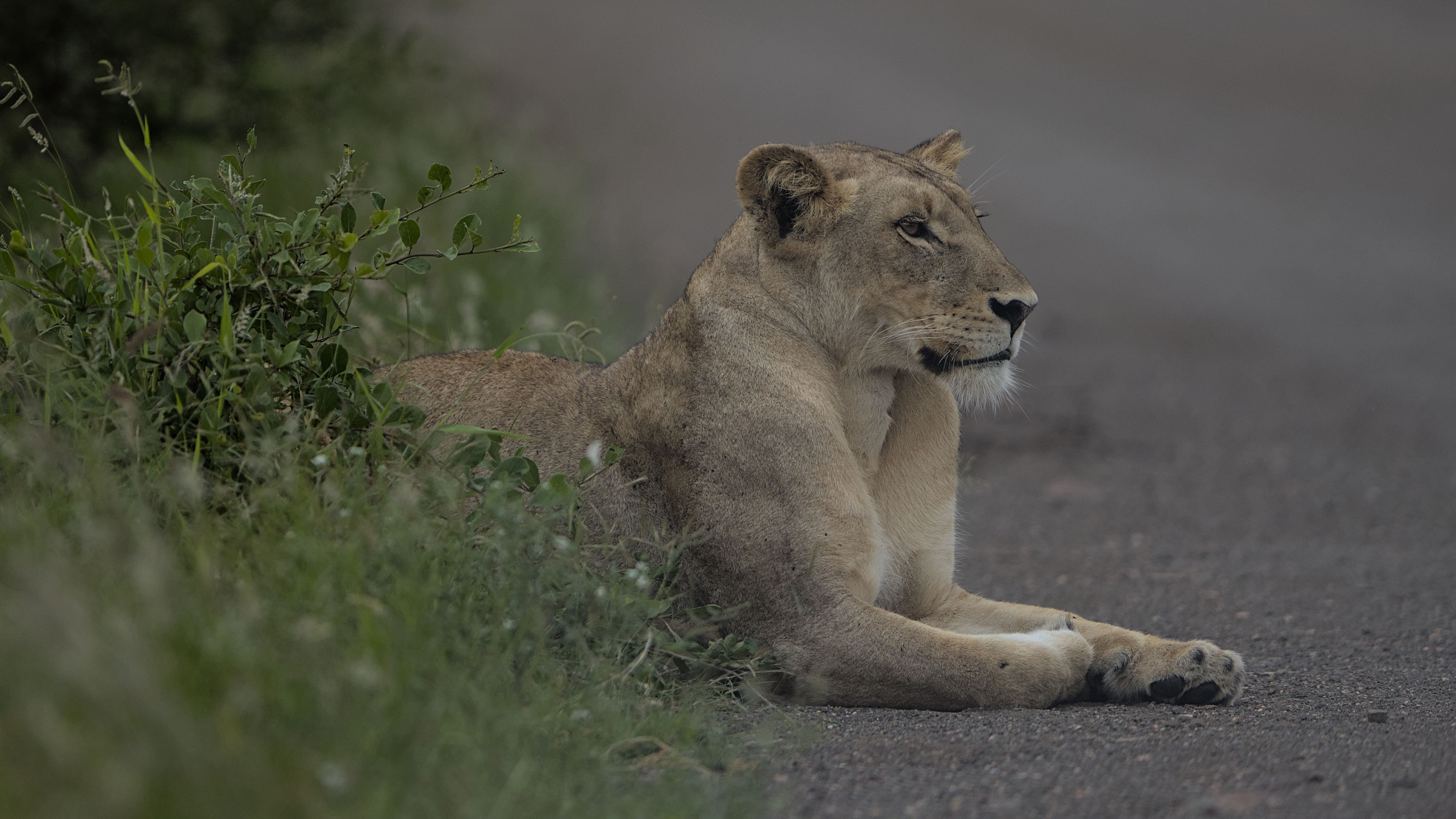
Kruger National Park covers nearly 19,500 square kilometres of savanna, woodland and riverine forest across the Mpumalanga and Limpopo provinces of north-eastern South Africa. Established in 1898 as the Sabie Game Reserve and proclaimed a national park in 1926, it is the country's largest protected area and one of the most visited wildlife destinations on the continent. The park stretches roughly 350 kilometres from north to south along the Mozambique border, encompassing habitats that range from open grassland and thornveld in the south to mopane woodland and baobab country in the north.
What distinguishes Kruger from many comparable parks is the breadth of what it offers across budget levels. A self-drive visitor staying in a SANParks rest camp and a guest at a private luxury lodge in the adjacent Sabi Sands are, in practical terms, having quite different experiences of the same ecosystem. The range from campsite to exclusive concession is wider here than almost anywhere else in Africa. This guide sets out the key decisions involved in planning a Kruger safari: when to go, practical travel tips, what wildlife to expect, current conservation fees and accommodation costs, entry requirements, what to pack and how to get there.
Key takeaways: best time to visit Kruger National Park
- Best overall: May to September, the dry winter, for concentrated wildlife and open sight lines. July and August are peak season and the most crowded.
- Best value with strong game viewing: May and September, the shoulder months, combine excellent sightings with fewer visitors.
- Cheapest and quietest: January to March, though thick summer vegetation makes game viewing harder and heavy rain can close some gravel roads.
- Self-drive rules that matter: 50 km/h on tar, 40 km/h on gravel, stay in your vehicle except at marked points, and be inside a gate or camp before it closes.
- 2026 conservation fee: R602 (around $33) per adult per day for international visitors, payable by card only at the gate.
Best time to visit, month by month
Kruger's seasons are defined by rainfall rather than a single annual wildlife event. The park has a subtropical climate, with a wet summer from October to April and a dry winter from May to September. These two seasons produce substantially different conditions on the ground, and the right time to visit depends on what the trip is meant to deliver.
The dry winter months from May to September are widely regarded as the best period for game viewing. As water sources diminish, wildlife concentrates around rivers and permanent waterholes, making animals easier to locate and observe. Vegetation thins considerably as the season progresses, opening sight lines across the bush. Temperatures are mild during the day, around 24 to 26 degrees Celsius, but can drop sharply at night and in the early morning, particularly in June and July when pre-dawn temperatures in some areas fall to single figures. Malaria risk is lower during this period.
June through August is peak season, with the highest visitor numbers. July in particular draws large crowds, partly because it coincides with South African school holidays. The southern section of the park, between the Sabie and Crocodile Rivers, is the most visited area and can feel congested around popular rest camps during this period. The northern sections, from Letaba northwards, see far fewer visitors and offer a quieter experience, though travel times between points of interest are longer.
The wet summer season from October to April is characterised by hot, humid days, afternoon thunderstorms and a dramatic transformation of the landscape. Vegetation is thick and lush, bird diversity peaks as summer migrant species arrive, and large numbers of young animals are born from November onwards. Game viewing is generally harder during this period as wildlife disperses across a landscape with abundant water and cover, though predator activity around remaining dry-season water sources can still be productive in October before the first substantial rains arrive.
January to March is the quietest and cheapest time to visit, with fewer tourists, lower accommodation rates at many lodges and some camps offering discounted packages. The trade-off is reduced visibility in the thick summer bush and the possibility of temporary road closures after heavy rain on low-lying gravel sections.
| Month | Game viewing | Typical temperature | Notes |
|---|---|---|---|
| January | Fair | 18–34°C | Hot, wet, lowest rates |
| February | Fair | 18–33°C | Still wet, quiet |
| March | Good | 18–33°C | Rains easing |
| April | Good | 13–28°C | Shoulder, cooling nights |
| May | Excellent | 13–28°C | Shoulder, low season, dry |
| June | Excellent | 9–26°C | Cold mornings, dry |
| July | Excellent | 9–26°C | Peak season, school holidays |
| August | Excellent | 12–28°C | Peak season, very dry |
| September | Excellent | 12–28°C | Shoulder, best-value excellent month |
| October | Good | 16–32°C | Hot, first rains near month end |
| November | Good | 16–32°C | Newborn animals, storms build |
| December | Fair | 18–34°C | Hot, wet, South African school holidays |
Travel tips for Kruger National Park
Beyond choosing when to go, a handful of practical rules and habits make the difference between a smooth Kruger trip and a frustrating one. These apply whether self-driving or on a guided vehicle.
Self-drive rules
The speed limit inside the park is 50 km/h on tar roads and 40 km/h on gravel roads, enforced with speed traps and fines from R100 up to R1,500 for serious violations. You must remain inside your vehicle at all times except at fenced picnic sites, designated viewpoints and camps; getting out elsewhere, even briefly for a photograph, is an offence. Off-road driving is not permitted under any circumstances. As a rough planning rule, expect to average no more than 25 km an hour once stops for sightings are factored in.
Gate and camp times
Every visitor is issued a permit showing that day's gate times, and being outside a gate or inside a camp before closing is mandatory; arriving late can bring a fine of R500 to R1,000. Gates generally open between 5:30am and 6:00am depending on the season and close between 5:30pm and 6:30pm, with the earliest opening times in December and January. Night driving outside an official guided night drive is not permitted, and camp accommodation can only be occupied from 2pm on arrival day and must be vacated by 10am on departure.
Money and connectivity
All Kruger gates and most in-park facilities are cashless; carry a credit or debit card for conservation fees, fuel and purchases. Mobile signal is patchy and officially restricted to camps, gates and emergencies while driving, so treat time between camps as offline. Larger rest camps such as Skukuza, Satara and Letaba have shops, fuel and, in most cases, at least one ATM, but do not rely on finding cash machines at smaller camps or gates.
Wildlife safety and etiquette
Animals always have the right of way and can appear on the road with little warning; slow down rather than speeding past a sighting. Feeding or deliberately disturbing wildlife is a serious offence, and litter is treated as a hazard because animals mistake it for food. Baboons and vervet monkeys will enter vehicles through open windows at rest camps, so keep windows closed when parked. If self-driving, ask other vehicles heading the opposite way what they have seen; sharing sightings between cars is standard practice and often the fastest way to find predators.
Plan around one section, not the whole park
Kruger is roughly the size of Israel or Wales, and trying to cover the full 350-kilometre length in a short trip usually means long drives and little time for actual game viewing. First-time visitors get more out of committing to one or two sections, most commonly the south between Skukuza and Lower Sabie, than attempting to see the whole park in three or four days.
What wildlife to expect
Kruger holds all of the Big Five: lion, leopard, elephant, buffalo and both southern white and black rhino. It also supports cheetah, African wild dog, spotted hyena, hippo, Nile crocodile and giraffe, alongside an exceptional diversity of antelope species including impala, kudu, waterbuck, tsessebe, roan and sable. The park is home to an estimated 1,600 lions, making it one of Africa's strongest lion populations, and lion sightings are reliable throughout the year. The area around Satara rest camp, set on open plains in the central section, is among the best lion habitat in the park.
Leopard are widely distributed but most reliably seen in areas with dense riverine vegetation. The Sabie River corridor in the south, between Skukuza and Lower Sabie, has a long-established reputation for leopard sightings and remains one of the most productive stretches of road for this species. Cheetah are present but at lower densities than in more open systems; the grasslands between Satara and Orpen are among the more productive areas.
African wild dog have recovered significantly in Kruger over recent decades and the park now holds one of the larger populations in southern Africa. Sightings are unpredictable and largely a matter of being in the right place, though some guides actively monitor pack locations and radio information between vehicles during active periods.
The black rhino population is small and largely concentrated in specific areas. White rhino are more numerous and sightings are relatively common, particularly in the southern section. Both species are under ongoing anti-poaching pressure, and population figures are not publicly disclosed in detail by SANParks.
Birdlife is exceptional throughout the park. SANParks records 507 bird species, a total unmatched by any other reserve in South Africa. The so-called Kruger Big Six for birders consists of the pel's fishing owl, saddle-billed stork, lappet-faced vulture, martial eagle, kori bustard and the southern ground hornbill, all of which are present in the park. Birding quality peaks during the summer wet season when migrants arrive and resident species are breeding, but productive birding is possible throughout the year.
Wildlife distribution shifts by section and season. The northern regions, from Shingwedzi northwards towards Pafuri, offer encounters with species less common in the south: roan antelope, eland, greater kudu and, at Pafuri near the Zimbabwe border, nyala. The Luvuvhu River at Pafuri is one of the most biodiverse corners of the park and is worth the considerable drive time for visitors with four or more nights available.
How long to stay
Three nights is a workable minimum, giving two full days on the roads and enough time to cover a reasonable range of habitat in one section of the park. For a first visit, the southern section, based from Skukuza or Lower Sabie, offers the densest wildlife and the greatest variety of sightings within a manageable area.
Four to five nights allows meaningful exploration across different sections, which vary enough in character to reward the additional time. A common approach is to spend two nights in the south, then move to the central section around Satara or Olifants for two more nights. The northern section requires more commitment: it is at least a four-hour drive from the southern camps to Shingwedzi, and doing it justice needs a night or two in the area rather than a day trip.
Visitors combining Kruger with a private reserve experience typically spend two to three nights inside the park on a self-drive basis, then move to a lodge in Sabi Sands or Timbavati for guided open-vehicle drives and bush walks. This pairing makes sense given what each option offers: the self-drive section covers ground and builds familiarity with the landscape, while the private reserve provides the close-range, off-road encounters and walking activities that are not available inside the national park itself.
Entry requirements and visa
Entry requirements for South Africa depend entirely on nationality, and the rules are more varied here than at most African safari destinations. Citizens of the United States, United Kingdom, Canada, Australia, New Zealand and most European Union countries enter visa-free for stays of up to 90 days and receive a visitor's permit stamped on arrival. No advance application is needed.
South Africa began rolling out an Electronic Travel Authorisation system in late 2025. As of early 2026, the ETA applies to nationals of China, India, Indonesia and Mexico, who can apply online before travel at no cost. This replaces the previous consular visa process for those nationalities. The rollout is expected to expand to additional visa-required nationalities over time, though no firm timeline has been confirmed by the South African government.
Citizens of Kenya, Nigeria, Uganda, Pakistan and many other African and Asian countries still require a visa applied for through a South African embassy or via VFS Global before departure. Processing times vary between five and twenty working days depending on the application route, so early application is important. Entry requirements change periodically, and it is worth verifying the current requirement for your specific passport on the official Department of Home Affairs portal before making travel plans.
No yellow fever certificate is required for visitors arriving directly from Europe, North America or most of southern Africa. Travellers arriving from or transiting through a yellow fever endemic country should carry a valid vaccination certificate. Kruger falls within a malaria risk area, particularly during the summer wet season, and consultation with a travel health clinic before departure is advisable.
Conservation fees and costs
SANParks charges a daily conservation fee for every person entering Kruger National Park, payable on arrival at the gate or at camp reception. Fees are tiered by visitor category and are reviewed annually, with the current tariff year running from 1 November 2025 to 31 October 2026. For international visitors, the fee is R602 per adult per day and R300 per child aged 2 to 11 per day. Children under two enter free. SADC nationals pay R275 per adult and R137 per child. South African citizens and permanent residents with a valid ID pay R134 per adult and R67 per child. All gates are cashless and payment is by card only.
Conservation fees are separate from and additional to accommodation costs at SANParks rest camps. Day visitors booking in advance during peak periods pay an additional non-refundable booking administration fee of around R59 per adult.
Total daily costs depend heavily on accommodation choice. At the budget end of the scale, self-drive visitors staying in SANParks rest camps face the lowest costs of any comparable Big Five destination in Africa. Campsites start at around R390 to R550 per night for up to two people. Basic huts and safari tents run from R800 to around R1,600 per night. Self-catering bungalows, which represent the most popular SANParks option, start at around R1,850 and reach R3,500 for larger units or river-facing positions. Adding the R602 per adult per day conservation fee, a couple spending three nights in a midrange SANParks bungalow would expect to pay in the region of R10,000 to R15,000 in park costs, depending on exact unit selection and camp.
Private lodge rates in the concessions within the national park and in the bordering private reserves follow a different pricing structure entirely. Midrange private lodges in areas such as Timbavati and Thornybush run from around $250 to $400 per person per night, all-inclusive of meals, game drives and guiding. Luxury lodges in Sabi Sands, including well-known operations such as Singita, Lion Sands and Londolozi, start at around $800 per person per night and can exceed $2,000 during peak season. These rates typically include park or conservancy fees, twice-daily guided drives in open vehicles, bush walks and all meals and local beverages.
Flights into the park are a significant additional cost for international travellers. The closest major hub is OR Tambo International Airport in Johannesburg, a roughly 4-to-5-hour drive from the southern gates. Scheduled flights from Johannesburg to Skukuza Airport inside the park, or to Kruger Mpumalanga International Airport near Hazyview, take around 45 minutes to an hour and cost in the region of $100 to $200 each way, depending on operator and season. Charter flights are also available from a number of departure points.
Accommodation options
Budget
SANParks rest camps are the foundation of the budget and midrange self-drive experience and have no real equivalent in Kenya or Tanzania. The main camps, including Skukuza, Lower Sabie, Satara, Olifants and Letaba, are substantial facilities with restaurants, shops, filling stations, swimming pools and a range of accommodation units. Camping starts at around R390 per night, and basic huts and safari tents run from R800 upwards. The camps are fenced but wildlife moves through, and evenings at waterhole viewpoints within camp are often productive. The self-catering option keeps food costs manageable and allows flexibility that guided packages do not.
Midrange
SANParks also manages a number of bushveld camps, such as Bateleur, Shimuwini and Talamati, which are smaller and more remote than the main rest camps, with no shops or restaurants. These offer a quieter and more immersive atmosphere and suit visitors who want the SANParks self-drive experience with a higher degree of solitude. Rates overlap with the upper end of main camp pricing. Private tented camps and lodges outside the national park boundary but within the Greater Kruger ecosystem, in areas such as Balule and Klaserie, typically charge from $200 to $400 per person per night all-inclusive and provide guided open-vehicle drives in unfenced areas.
Luxury
The private reserves bordering the south-western boundary of Kruger, principally Sabi Sands, Mala Mala and Timbavati, operate under separate management to SANParks and offer open-vehicle game drives, night drives and guided walking safaris that are not permitted inside the national park. Many of the properties here share unfenced boundaries with Kruger, giving access to wildlife ranging freely across a vast connected ecosystem. Lodge sizes are small, guiding standards are high and the level of personalisation is considerably greater than in the public park. This is where Kruger compares most directly with the top-tier private camps of the Maasai Mara or Okavango Delta, and is priced accordingly.
What to pack
Kruger's climate demands more versatility than most East African safari destinations. Winter mornings, particularly in June and July, are genuinely cold; temperatures at dawn can drop to between 5 and 10 degrees Celsius in the southern section and lower in the north. A warm fleece or light down jacket is essential for early morning drives, whether self-driving or in an open vehicle. Daytime temperatures rise to the mid-twenties and can be warm enough for short sleeves by mid-morning. Layers that can be added or removed are more practical than heavy outerwear.
Neutral-coloured clothing is standard for game drives. Dust is a factor on gravel roads during the dry season, and a bandana or buff can be useful in open vehicles. Sunscreen and a wide-brimmed hat are necessary year-round. Walking shoes with ankle support are useful if bush walks are planned, and closed shoes are preferable to sandals in camp, where scorpions and snakes are occasionally encountered.
Binoculars make a significant difference on self-drive safaris, where birds and distant animals on open plains can otherwise be difficult to assess. A specification of 8x42 or 10x42 covers most situations. For photography, a telephoto lens of 100 to 400mm is practical for vehicle-based shooting, and a beanbag placed on the window frame is a more stable support than a monopod in a moving vehicle. The light in the Kruger is excellent during the golden hours around dawn and dusk, which coincide with the periods of highest wildlife activity.
Getting there
OR Tambo International Airport in Johannesburg is the primary international gateway. From Johannesburg, the southern gates of Kruger, including Paul Kruger Gate near Skukuza and Malelane Gate on the southern boundary, are approximately 400 to 450 kilometres by road, a drive of around four to five hours via the N4 highway. The town of Hazyview serves as a convenient overnight stop for those breaking the journey from Johannesburg, and lies close to several of the most-used entry gates.
Scheduled domestic flights from Johannesburg to Skukuza Airport operate year-round and take approximately 45 minutes. The airstrip at Kruger Mpumalanga International Airport near Hazyview also handles scheduled and charter traffic. Self-driving is practical and widely done; rental cars are available from all major providers at OR Tambo and in Nelspruit, the nearest large town to the park. A standard sedan handles the tarred roads without difficulty, though a higher-clearance vehicle is useful for some of the more remote gravel sections and for the central and northern regions after rain.
Fuel is available at most of the larger rest camps inside the park, including Skukuza, Satara, Olifants, Letaba and Shingwedzi. Filling up at each major camp is a sensible habit given the distances involved in the northern sections, where camp spacing is greater.
Frequently asked questions
Is Kruger National Park worth visiting?
Yes. Kruger is one of Africa's largest and most biodiverse national parks, with reliable sightings of lion, leopard, elephant, buffalo and both white and black rhino. It is also one of the most accessible Big Five destinations on the continent, with a well-developed road network, affordable SANParks rest camps and the option of self-drive safaris.
How many days do you need in Kruger National Park?
Three nights is a workable minimum, giving two full days on the roads. Four to five nights allows meaningful exploration of different sections of the park, which vary considerably in landscape and wildlife.
What is the best month to visit Kruger National Park?
June to September offers the best game viewing. Vegetation is sparse, water sources are concentrated, and wildlife gathers in predictable spots. July and August are peak season with the largest visitor numbers. May and September are the best shoulder months, combining excellent game viewing with fewer crowds.
What are the most important travel tips for Kruger National Park?
Stick to the speed limits (50 km/h on tar, 40 km/h on gravel), stay inside your vehicle except at marked picnic sites and viewpoints, and be inside a gate or camp before closing time to avoid a fine. Gates and facilities are cashless, so bring a card. Mobile signal is limited outside camps. First-time visitors generally get more out of focusing on one or two sections rather than trying to cover the whole park in a short trip.
Do I need a visa to visit Kruger National Park?
Entry requirements depend on nationality. Citizens of the US, UK, Canada, Australia and most EU countries enter visa-free for up to 90 days. Citizens of India and China are eligible for a free ETA applied for online. Citizens of many other nationalities, including Kenya, Nigeria and Uganda, must apply through a South African embassy or VFS Global before departure. Always verify the current requirement for your specific passport before travelling.
How much does a Kruger National Park safari cost?
Self-drive visitors staying in SANParks rest camps pay a conservation fee of R602 (around $33) per adult per day, plus accommodation from around R390 per night for a campsite to R3,500 for a self-catering chalet. Private lodge rates range from around $250 to $400 per person per night for midrange all-inclusive properties, and from $800 to over $2,000 per person per night for luxury lodges in adjacent private reserves.
Can you self-drive in Kruger National Park?
Yes. Self-drive is one of the defining features of Kruger and is actively supported by SANParks. The park has an extensive network of tarred and gravel roads, and visitors drive their own vehicles between camps and along game-viewing routes. A standard sedan is adequate for the tarred roads. Speed limits inside the park are strictly enforced and gates open and close at fixed times that vary by season.
Comments
Loading comments…